
Foldable Mobility Scooter Buyer's Guide
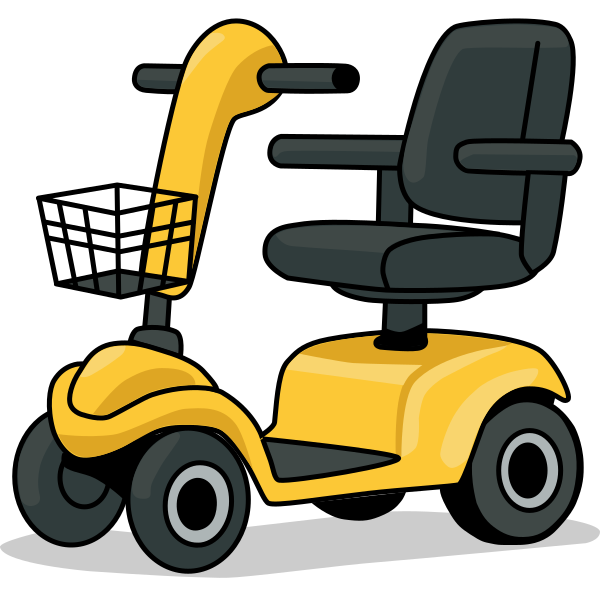

A foldable mobility scooter is a small, lightweight mobility scooter designed specifically to be taken apart or folded up easily. The main goal is to fit it into the boot of a standard car, including smaller UK models, so you can take it with you on trips, shopping, or holidays. This guide will help you understand the key features and decisions when buying one.
Portability is only one of several decisions a scooter purchase involves. If you haven't yet settled on folding vs. dismantling as the axis that matters most to you, our mobility scooter types guide walks through this alongside legal class, wheel layout and capacity before you narrow in here.
What is a Foldable Mobility Scooter and How is it Used?
Foldable mobility scooters are always classified in the UK as Class 2 mobility vehicles. This legal category dictates their use and performance:
- Maximum Speed: They are legally restricted to a maximum speed of 4mph.
- Where to Use Them: They are for use only on pavements, footpaths, and pedestrian areas. You cannot drive them on the road, except where there isn't a pavement, and then only with great care.
- Range: Because they are lightweight, they usually have a limited range, typically up to 10 miles on a single charge. This makes them perfect for short trips and local errands, not for long-distance travel.
- Independence: They give you freedom for local journeys, but you must pair them with a car or public transport for longer trips.
| Classification | Maximum Speed | Where to Use | Use Case |
|---|---|---|---|
| Class 2 (Foldable Mobility Scooter) | 4mph | Pavements, Footpaths, Pedestrian Areas | Short trips, shopping, local errands |
| Class 3 (Road Scooter) | 8mph | Roads, Pavements | Longer journeys, primary transport |
Two Ways to Achieve Portability
Manufacturers use two main engineering designs to make scooters easy to transport. Your choice here depends entirely on your strength and how quickly you need to pack and unpack the scooter.
1. Manual Disassembly (Modular)
This design uses a modular approach, meaning the scooter separates into several small, light pieces (usually 3 to 5 parts). You take off the seat, the battery, and then the main chassis breaks into one or two parts.
- Key Advantage: The most important part is the Heaviest Part Weight (HAP). By separating the scooter, the heaviest piece you have to lift (the main chassis) is usually only 25lbs (11kg) to 35lbs (16kg). This is ideal if you have limited back strength or grip and can manage several light, controlled lifts but not one single heavy one.
- Ride Quality: Because the components aren't all cramped into a folding frame, these often have a more comfortable ride with a larger seat and better stability (usually a 4-wheel design).
- Examples: Monarch Air, Pride Apex Rapid 'Pro'.
2. Automatic/Manual Folding (Monocoque)
These scooters are built on a single frame that folds or collapses into a single unit, much like a suitcase. This is often done with the push of a button (automatic) or a simple lever (manual).
- Key Advantage: Speed and Convenience. You can fold or unfold the scooter in seconds, making it excellent for quick transitions between a car, a train, or an airport. They also take up a very small amount of boot space.
- The Trade-Off: The Heaviest Part Weight (HAP) is the entire folded scooter (once the battery is removed). Even though they are made from light materials (like magnesium alloy), the single lift can still be around 40lbs (20kg) to 55lbs (25kg). This requires a single, sometimes awkward, lift of a slightly bulkier object.
- Examples: eFOLDi Lite.
| Feature | Manual Disassembly | Automatic/Manual Folding |
|---|---|---|
| Heaviest Part Weight (HAP) | Very Low (e.g., 25lbs (11kg)) | Medium (e.g., 45lbs (20kg)) |
| Lifting Action | Multiple, easy, non-bulky lifts | Single, quick, potentially awkward lift |
| Speed to Deploy | Slower (requires reassembly) | Very Fast (folds in seconds) |
| Ride Comfort | Generally superior (often 4-wheel) | Generally good, but can be less stable (often 3-wheel) |
| Ideal User | Prioritizes comfort; needs the lightest lift weight. | Prioritizes speed/convenience; frequent traveler. |
The Most Important Specification: Heaviest Part Weight (HAP)
Do not look only at the total weight of the scooter. The Heaviest Part Weight (HAP) is the number that matters most.
- HAP is Your Lifting Limit: The HAP tells you the weight of the single largest piece you or your caregiver must lift to get the scooter into or out of your car boot.
- The Recommended Range: For most people, the safest and easiest weight to lift into a car boot is between 25lbs and 45lbs. If the HAP is much more than 45lbs, you may struggle to load it independently, which defeats the purpose of a foldable mobility scooter.
Battery Technology
Modern foldable mobility scooters use Lithium-Ion (Li-ion) batteries.
- Why Li-ion is Better: They are much lighter and hold more power than older, heavier lead-acid batteries. They also charge faster.
- Airline Travel: If you plan to travel by plane, models with Li-ion batteries (like the eFOLDi Lite) are often compliant with airline regulations, but you must always check with your specific airline before travelling.
- Maintenance: To keep your battery healthy and ensure you get the maximum range, you must recharge it regularly.
A Note on Legal Compliance
When buying any foldable mobility scooter, you must be absolutely certain that the model you buy is UK Class 2 compliant.
- Check the Speed: The scooter must not be capable of going faster than 4mph. Some international versions sold online might be capable of 6mph or more; these are not legal to use on UK pavements and could void any insurance you have.
- Ask the Dealer: Always ask the UK seller to confirm in writing that the scooter is strictly limited to 4mph for UK use.
Compare the Top Folding Scooters
Once you've settled on folding over disassembly, the decision usually comes down to two specific models in your budget. We've reviewed the three matchups that come up most often:
- Budget auto-folders (£745–£1,440): Drive InstaFold vs AutoFold — both fold by remote control, at nearly double the price apart. Covers what "automatic folding" actually means, folded size, and which weight capacity you need.
- Mid-range (£1,300–£2,500): eFoldi Compass vs Pride Go-Go Compact — lifting weight, folded size, range, battery options, air travel readiness, and comfort features.
- Premium folders (£2,500–£3,000): Kymco K-Lite FE vs eFOLDi Compass — the two best-known premium folders, and whether the eFOLDi's lighter fold justifies its price over the Kymco's dealer network.
Because eFOLDi appears in two of those three matchups, it is worth reading the eFOLDi range guide alongside them — it covers all three eFOLDi models and their 2026 prices, including the suspension trade-off between the Compass and the Lite that neither comparison touches on.
Your Purchasing Checklist
- Test the Lift (MANDATORY): Take your personal car to the mobility store. Ask the seller to let you and/or your primary caregiver lift the heaviest part (HAP) into and out of your car boot. This test is the only way to ensure the scooter truly works for your independent use.
- Test the Drive: Try both a 3-wheel and a 4-wheel design on different surfaces (if possible) to decide which level of comfort and stability you prefer.
- Check the Warranty: Make sure you buy from an authorised dealer and confirm the warranty details for the frame and the battery.
- Consider Your Use:
- If you travel often and use planes/trains: Choose a quick-folding model for maximum convenience (e.g., eFOLDi Lite).
- If you mainly use it for daily local errands and prioritise comfort: Choose a disassembly model for superior stability and a low HAP (e.g., Monarch Air or Pride Apex Rapid 'Pro').
- Seek Advice: Before making a final decision, it's wise to consult with a mobility expert or your healthcare professional to ensure the chosen scooter is the best fit for your specific needs.
Related Models
Drive DeVilbiss
AutoFold
Drive DeVilbiss
AutoFold Elite
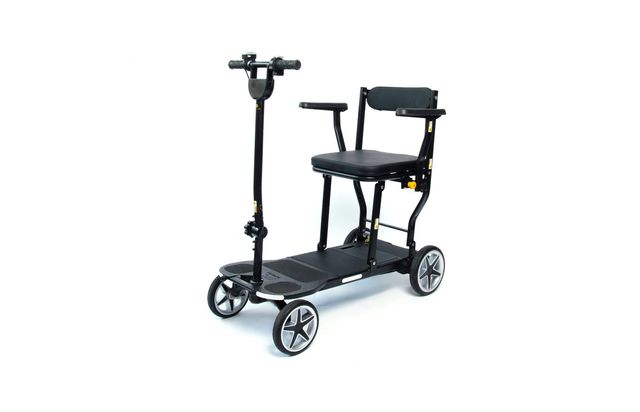
eFOLDi
Compass
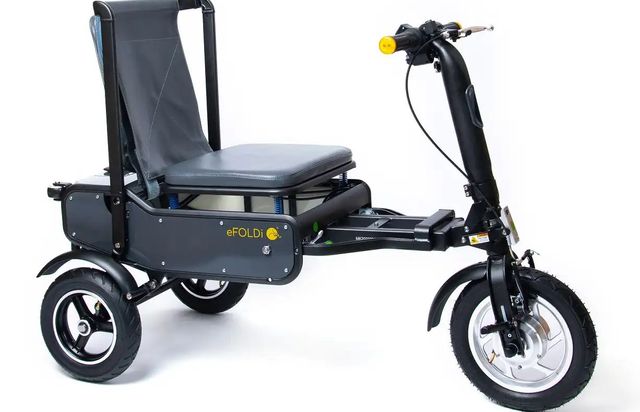
eFOLDi
Explorer
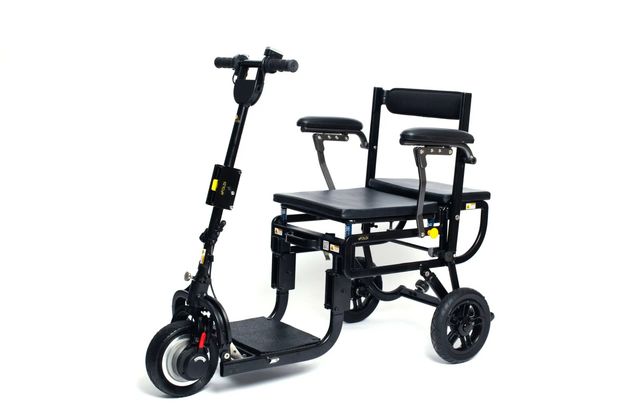
eFOLDi
Lite
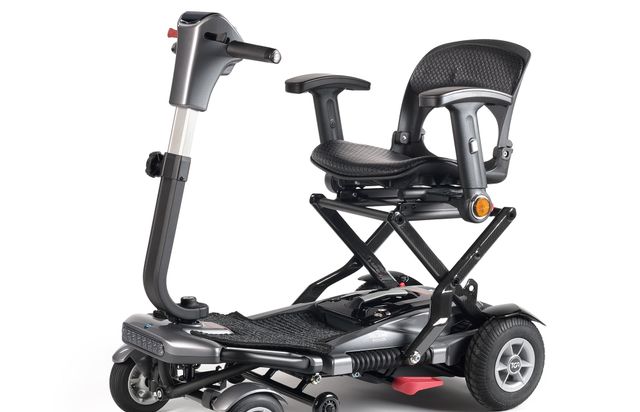
TGA Mobility