
Are Mobility Scooters Waterproof? Rain & Winter Use Guide 2026

Nobody buys a mobility scooter to ride only on dry days. This is Britain: sooner or later you will be caught out by rain, and in winter you may want to go out in it on purpose. So the practical question is not "is it waterproof?" but "how much weather can this scooter actually take, and what do I need to do about the rest?"
The honest answer is that almost no mobility scooter is waterproof in the sense a watch or a phone is. They are built to shrug off rain, and they are not built to be soaked, hosed down or driven through deep water. This guide explains what the ratings on a spec sheet mean, which models in our database publish one, how to ride in the wet, and how to get a scooter and its battery through winter. For the fitted and add-on protection itself, see our guide to mobility scooter accessories.
Short Answer: Rain Is Fine, Water Is Not
| Situation | Verdict |
|---|---|
| Light to moderate rain on a ride | Fine for most outdoor scooters |
| Heavy downpour | Shelter if you can; rider comfort and visibility are the main problem |
| Puddles and standing water | Go round them. Deep water can reach the motor, controller and connectors |
| Hosing or pressure-washing | Never. Wipe clean with a damp cloth |
| Leaving it outside uncovered | Avoid. Moisture over days does more damage than a single wet ride |
| Charging a wet scooter | Dry the charging port and connectors first |
The pattern is that a short spell of rain is rarely the problem. Water that is forced in (jets, deep puddles) or left to sit (an uncovered scooter outdoors for weeks) is.
What IP Ratings Actually Mean
Where a manufacturer does publish a rating, it will be an IP (Ingress Protection) code, such as IPX4 or IPX5. It is worth knowing how to read one, because the word "waterproof" on a product page often means much less than it sounds.
- The first digit rates protection against dust and solid objects.
- The second digit rates protection against water.
- An X means that type of protection was not tested or claimed. On scooters you will usually see IPX followed by a water digit.
| Rating | What it covers | In scooter terms |
|---|---|---|
| IPX4 | Splashing water from any direction | Rain showers, spray from wet pavements |
| IPX5 | Low-pressure water jets from any direction | Heavy rain, being wiped down; still not a pressure washer |
| IPX7 | Temporary immersion in shallow water | Not a rating you should expect on a scooter |
Two things to keep in mind:
- A rating usually applies to specific parts. A scooter's display, controller or battery pack may each be rated differently, or only one of them may carry a rating. Ask what exactly the figure covers.
- "Waterproof" without an IP code is marketing. If a listing says "weatherproof" or "waterproof" and gives no rating, treat it as a description of intent, not a tested standard.
Which Models Publish a Rating?
This is where the data is thin, and it is worth being plain about it. Across the active models in our product database, only two brands publish an IP rating that we have recorded, and both rate their scooters IPX5:
| Model | Class | Price | Published water protection |
|---|---|---|---|
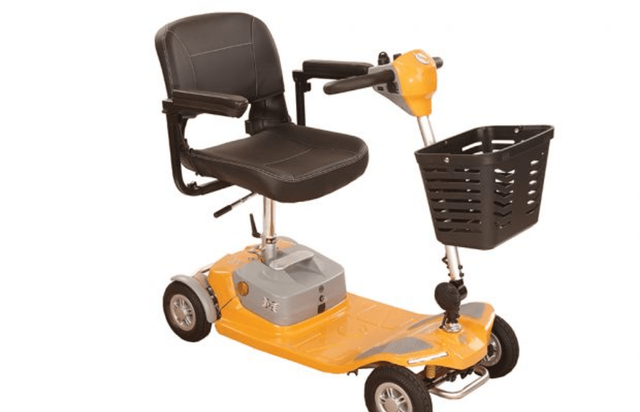
| Rascal Luxe | 2 | £2,150 | IPX5 |
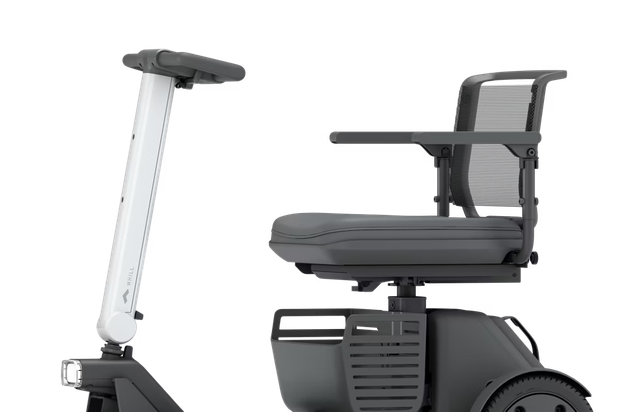
| WHILL Model R (3- and 4-wheel) | 2 | £4,194 | IPX5 |
Every other model either does not publish a rating or describes its protection only loosely. That is not the same as being unprotected, because many manufacturers simply do not test or publish, but it does mean that for most scooters you are relying on the manufacturer's general statement that it is suitable for outdoor use. If water resistance matters to you, ask the retailer for the rating in writing before you buy.
Other Weather-Related Features in the Range
A handful of models advertise specific protection without a full IP code. These are worth knowing about because they solve a particular problem rather than promising blanket waterproofing:
| Model | Class | Price | Weather feature |
|---|---|---|---|
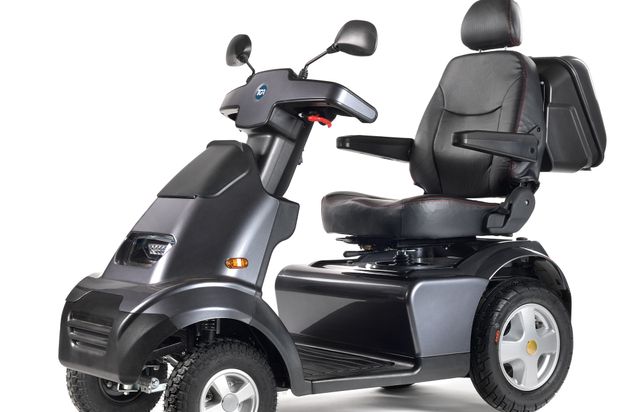
| TGA Breeze S3 / S4 | 3 | £5,195 | Lockable waterproof storage compartments; optional canopy (S4) |
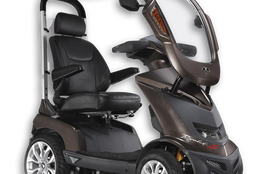
| Drive Royale 4 Sport | 3 | £5,495 | Weatherproof canopy |
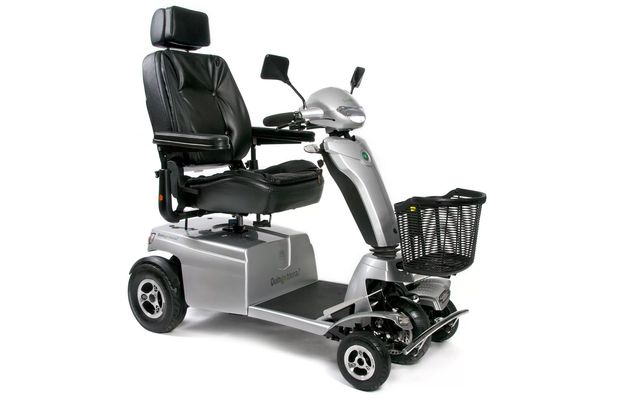
| Quingo Toura 2 | 3 | £7,695 | Optional all-weather canopy |
| Kymco Agility | 3 | £3,329 | Waterproof backlit LCD display |
| Shoprider Traveso | 3 | n/a | Fully enclosed cabin with lockable doors, designed for all-weather travel |
Note what these are: a dry place for your shopping, a roof over your head, a display that will not fog up. They protect the rider and their belongings more than the drivetrain. A canopy keeps you dry, and does nothing for a puddle at wheel height.
The Shoprider Traveso is the outlier, a closed-cabin scooter that is the nearest thing in the range to driving in a small car. It is an unusual product, and its price is not listed in our database, so contact the supplier for current pricing. For a wider look at weatherproof road scooters in this class, see our best Class 3 mobility scooters roundup.
Riding in the Rain
You can ride safely in rain if you prepare for the things that actually change:
Stopping takes longer. Wet paving, painted road markings, drain covers and fallen leaves all reduce grip. Slow down before corners and kerbs rather than braking on them. On Class 3 scooters, remember the road rules still apply, and visibility matters more in rain, so use your lights.
Avoid standing water. A puddle can hide a pothole, and it is the one rain hazard that can put water into the parts that do not like it. If you cannot see the bottom, go round.
Keep the rider dry first. A wet, cold rider is the real safety issue. A waterproof cape that covers both you and the tiller, or a fitted canopy on a larger scooter, is cheaper than any repair. We cover both in the accessories guide.
Protect your hands and controls. Wet gloves slip on throttle levers and brake handles. Keep a dry pair in a basket or storage compartment.
Keep the charging port dry. If the scooter gets wet, dry the charging socket and connectors before plugging in. Never charge with water visible around the port.
Stop for heavy downpours. Visibility drops for you and for drivers. Waiting ten minutes in a shop doorway is a perfectly good strategy.
Washing and Drying
The fastest way to void a good rating is to wash the scooter like a car.
- Wipe, do not spray. Use a damp cloth and mild soap on the frame, seat and panels.
- Never use a pressure washer or hose. Water forced under seals reaches the controller, connectors and battery housing. An IPX5 rating covers low-pressure jets, not a pressure washer.
- Dry connectors and the tiller head with a dry cloth after a wet ride.
- Check the seat and cover seams and let the seat dry out before folding or covering the scooter, to avoid trapped damp.
- Keep it on a dry surface. Parking on wet grass or a damp garage floor keeps the underside wet for days.
These checks fit naturally into the routine in our maintenance checklist, which covers the weekly and monthly tyre, connection and lighting checks that matter more through winter.
Winter: The Bigger Problem Is the Battery
For most owners, cold matters more than wet. Our battery guide covers this in detail, but the points that matter for winter use are:
- Cold reduces capacity. Expect noticeably less range on a cold day than the figure on the spec sheet. Plan shorter outings or carry less margin for error on long trips.
- Store it warm. Keep the scooter indoors overnight if you can. A cold garage is the most common cause of winter battery trouble.
- Do not charge a cold battery. Avoid charging below 5°C. Bring the scooter or battery inside and let it warm up first.
- Charge fully and regularly. Do not leave a sealed lead-acid battery flat over the winter.
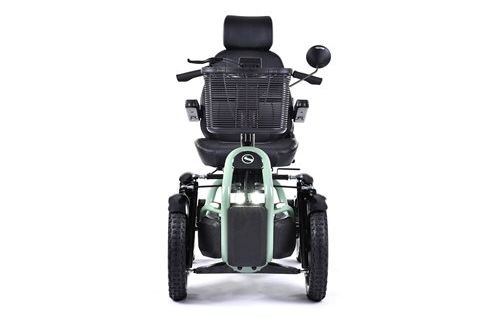
One model worth noting for cold conditions is the Sterling S800 by Scoozy (£5,995), whose lithium-ion battery has built-in heating specifically for cold weather. It is the only scooter in our database to list that feature, and it is a Class 3 at the top of the price range, so it is a niche answer rather than a general recommendation.
Ice, Frost and Salt
Frost makes pavements slippery and gritting salt is hard on any metal. After a ride on salted roads, wipe down the frame, wheels and underside with a damp cloth to remove salt residue, which accelerates corrosion if it is left to dry on.
On ice, the usual advice applies: if you would not want to walk on it, do not ride on it. Scooters have far less grip than a walker's boots.
Storing Your Scooter Outside
If a garage or hallway is not an option:
- Use a fitted, waterproof, breathable cover. Non-breathable plastic sheeting traps condensation, which is worse than rain.
- Keep the scooter off bare ground, on a hard, dry surface.
- Take the battery inside if it is removable.
- Check connectors and the charging port regularly for moisture or corrosion.
Our accessories guide lists covers and their typical prices.
What to Look for if Weather Matters to You
If you know you will ride in all weathers, use this as a checklist when comparing models:
- A published IP rating, with the retailer able to say what it covers.
- A compatible canopy or cape option, so you can stay dry. Canopies suit larger, more stable scooters, not lightweight travel models.
- Lights for winter afternoons. See the Class 3 roundup for road-legal lighting.
- Ground clearance and larger pneumatic tyres for wet and muddy surfaces. Our off-road guide covers what to look for.
- Lockable, dry storage for your shopping and valuables.
- Indoor storage or charging space for the winter months.
Frequently Asked Questions
Are mobility scooters waterproof?
Not fully. Most are built to cope with rain showers but not to be submerged or hosed down. Only a minority of manufacturers publish an IP rating. Check the specification, or ask the retailer, rather than assuming.
Can you use a mobility scooter in the rain?
Yes, in normal rain, on scooters designed for outdoor use. Ride slowly, avoid standing water, stay dry with a cape or canopy, and dry the scooter afterwards. See riding in the rain above.
What does IPX4 or IPX5 mean on a mobility scooter?
IP stands for Ingress Protection. The second digit is water protection, and the X means dust protection was not tested. IPX4 means resistant to splashing water from any direction, and IPX5 means resistant to low-pressure jets. Neither rating covers submersion.
Can I wash my mobility scooter with a hose or pressure washer?
No. Wipe it with a damp cloth. Even an IPX5 scooter is only rated against low-pressure jets, and a pressure washer can force water into the controller, connectors and battery housing.
Does cold weather affect a mobility scooter?
Yes. Cold reduces battery capacity and range. Store the scooter indoors overnight and avoid charging a cold battery below 5°C. See our battery guide.
Is it safe to leave a mobility scooter outside in the rain?
It is better not to. Moisture over days damages connectors and encourages corrosion. If you must, use a waterproof, breathable fitted cover and bring the battery indoors.
Does insurance cover water damage?
Policies vary. Some cover accidental damage and some exclude water ingress or damage from leaving a scooter outdoors. Check the exclusions before you rely on it. Our insurance guide explains what to look for.
Related Guides
- Best Mobility Scooter Accessories: capes, canopies and covers
- Mobility Scooter Battery Guide: cold weather, charging and storage
- Mobility Scooter Maintenance Checklist
- Best Class 3 Mobility Scooters
- Off-Road & All-Terrain Mobility Scooters
Related Models
TGA Mobility
Breeze S4
Rascal Mobility
Luxe
WHILL
Model R (3-Wheel)
Drive DeVilbiss
Royale 4 Sport
Sterling
S800 By Scoozy
Quingo