
Where Can You Legally Drive a Mobility Scooter? Pavement & Road Rules (2026)

Buying a mobility scooter raises an obvious question that the paperwork rarely answers clearly: where am I actually allowed to go? Can you drive on the road? Are you stuck on the pavement? What about a dual carriageway when there's no other route, or a cycle lane that runs right where you need to be?
The rules come down to one thing - which class of scooter you have - and then a handful of common-sense conditions on top. This guide sets out exactly where you can and can't drive a mobility scooter in the UK in 2026, for both Class 2 and Class 3 models.
This is a separate question from whether you need a licence or have to register the scooter. If that's what you're after, see our guide on whether you need a licence for a mobility scooter. Here we're only dealing with where you're permitted to ride.
It All Starts With the Class
Every rule about where you can drive flows from your scooter's class. There are only two that matter on the public highway:
- Class 2 scooters - limited to 4 mph, designed for pavements and pedestrian areas. No DVLA registration needed.
- Class 3 scooters - can do up to 8 mph on the road but must drop to 4 mph on pavements. Road-legal, and must be registered with the DVLA (registration is free).
For a fuller breakdown of the two, including the equipment a Class 3 must legally carry, see our Class 2 vs Class 3 comparison. The short version: a Class 2 is a pavement machine, a Class 3 can also use the road.
Where You Can Drive
Pavements and pedestrian areas
Both classes are allowed here - this is where most scooter use happens. The single firm rule is speed: on a pavement or in a pedestrian area you must not exceed 4 mph, whichever class you own. A Class 3 scooter has a switch or dial to drop it from 8 mph to 4 mph, and you're expected to use it before you move off the road.
Pedestrians always have priority. Slow down around people, give way, and treat a busy pavement the way you'd want a cyclist to treat you.
On the road
Only a Class 3 scooter can properly use the road. When you do:
- Travel in the same direction as traffic, not against it.
- Keep to the 8 mph limit and obey all traffic signals and road markings, exactly as any vehicle would.
- Use your lights, indicators, and horn where fitted, and use lights after dark - they're a legal requirement on a Class 3.
- Take extra care at junctions and roundabouts; you're slower than everything around you, so make your intentions clear early.
A Class 2 scooter is not for road use. The one exception: you may go onto the road to cross it, or to travel a short stretch where there is no pavement available. In that situation take extra care, keep as far to the left as is safe, and rejoin the pavement as soon as you can.
If you're still choosing a scooter and these pavement rules describe all the riding you plan to do, you don't need road-legal capability at all - our best Class 2 mobility scooters roundup covers the 4 mph models worth buying.
Crossings and dropped kerbs
At a pedestrian crossing, cross as a pedestrian would - use the crossing, wait for the signal, and take your time. Use dropped kerbs to get on and off the pavement rather than bumping down a full kerb, which is hard on both you and the scooter.
Shared paths, parks, and pedestrian zones
Shared-use paths marked for both pedestrians and cyclists are fine to use at pavement speed. Many parks, promenades, and town-centre pedestrian zones have accessible paths designed with scooters and wheelchairs in mind.
Where You Can't Drive (or Need Extra Care)
Some places are off-limits, and a couple require a specific condition to be met first.
| Location | Class 2 | Class 3 | Notes |
|---|---|---|---|
| Pavement / pedestrian area | ✅ Yes (4 mph) | ✅ Yes (4 mph) | Give priority to pedestrians |
| Ordinary road | ❌ Crossing only | ✅ Yes (8 mph) | Class 3 travels with the traffic |
| Dual carriageway | ❌ Never | ⚠️ Only with a flashing amber beacon | Best avoided where possible |
| Motorway | ❌ Never | ❌ Never | Prohibited for all scooters |
| Cycle-only lane | ❌ No | ❌ No | Shared cycle/pedestrian paths are fine |
| Bus lane | ⚠️ Avoid | ⚠️ Avoid | Highway Code advises against it |
Motorways - never
No mobility scooter, of any class, may be used on a motorway. This is absolute.
Dual carriageways - Class 3 only, with a beacon
A Class 3 scooter is allowed on a dual carriageway, but only if it displays a flashing amber beacon so faster traffic can see you well in advance. Even then, a dual carriageway with a 60 or 70 mph limit is a hostile place for an 8 mph vehicle - avoid it and take an alternative route wherever one exists. A Class 2 scooter must never be used on a dual carriageway.
Cycle-only lanes and bus lanes
Stay out of cycle-only lanes - they're for bicycles, and you'll be neither fast enough nor expected. Where a path is marked as shared for pedestrians and cyclists, you can use it at pavement speed. The Highway Code also advises mobility scooter users to avoid bus lanes; if you must cross one, do so quickly and carefully.
Private Land: Shops, Supermarkets, and Car Parks
Once you're off the public highway, road law stops applying and it's the landowner's decision. In practice:
- Supermarkets and shopping centres almost always welcome mobility scooters, and many keep their own scooters to lend.
- Parks and public gardens are usually council land with accessible paths, though some have surface or width limits on certain routes.
- A small number of venues - some heritage sites, tight indoor spaces, or crowded events - restrict scooters or ask you to transfer to a manual wheelchair.
If a trip matters, a quick call ahead saves a wasted journey. None of this is about the law; it's about the specific site's own access policy.
A Note on Age and Common Sense
You must be at least 14 years old to drive a Class 3 scooter on the road. There's no minimum age for Class 2 pavement use, but the scooter should always be used by someone who can control it safely.
Beyond the letter of the rules, the two habits that keep you legal and safe are simple: stick to 4 mph anywhere near pedestrians, and only take a Class 3 onto the road - never a Class 2, except to cross.
Getting Your Scooter Somewhere Else Entirely
The rules above cover driving your scooter. Getting it onto a bus, train, plane, or ferry to travel further afield is a different set of rules again - size limits, permits, and battery restrictions that vary by operator. We cover those in full in our guide to taking a mobility scooter on public transport and, for trips away, taking your scooter on holiday.
Related Guides
- Do you need a licence for a mobility scooter? - registration, tax, and testing explained.
- Class 2 vs Class 3 mobility scooters - the decision that sets where you can ride.
- Best Class 3 mobility scooters - road-legal 8 mph models.
- Mobility scooter insurance - why road users in particular should consider cover.
- Taking a mobility scooter on public transport - buses, trains, trams, and permits.
Frequently Asked Questions
Can you drive a mobility scooter on the road in the UK?
Only a Class 3 mobility scooter (up to 8 mph, registered with the DVLA) can be driven on the road. A Class 2 scooter (up to 4 mph) is for pavements and pedestrian areas and may only go on the road to cross it, or where there is no pavement available. On the road, a Class 3 scooter must travel in the same direction as traffic and follow the Highway Code.
Can a mobility scooter go on the pavement?
Yes. Both Class 2 and Class 3 mobility scooters can be used on pavements and in pedestrian areas, but they must be limited to 4 mph and give priority to pedestrians. Class 3 scooters have a switch to drop their speed from 8 mph to 4 mph when moving from the road onto a pavement.
Can you use a mobility scooter on a dual carriageway?
A Class 3 mobility scooter may use a dual carriageway, but only if it displays a flashing amber beacon so other drivers can see it. It is safer to avoid dual carriageways where you can. Class 2 scooters must never be used on a dual carriageway, and no mobility scooter of any class may be used on a motorway.
Can you take a mobility scooter in a cycle lane?
You should not use cycle-only lanes on a mobility scooter. Shared paths and tracks marked for both pedestrians and cyclists can be used, keeping to 4 mph and giving way to people on foot. The Highway Code also advises mobility scooter users to avoid bus lanes.
Can you drive a mobility scooter in a park or shopping centre?
Parks, shopping centres, supermarkets, and similar venues are private or council-managed land, so access is at the owner's discretion rather than set by road law. Most supermarkets and shopping centres welcome mobility scooters, and many parks have accessible paths, but a few venues restrict them or ask you to use a manual wheelchair. Check ahead if you are unsure.
Related Models
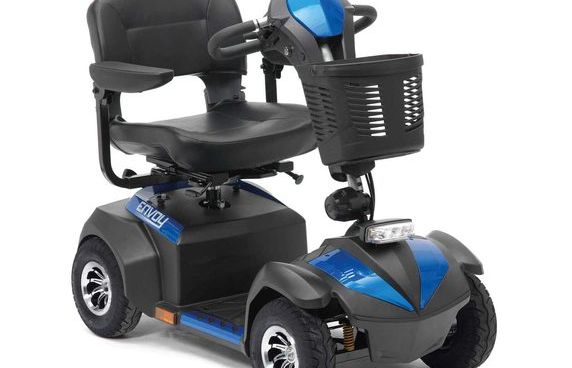
Drive DeVilbiss
Envoy 4
Drive DeVilbiss
Envoy 8
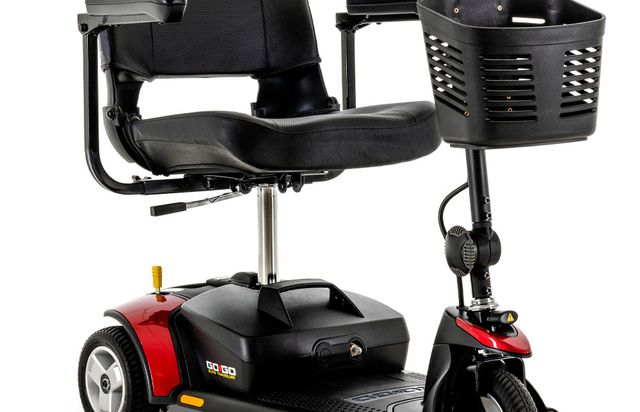
Pride Mobility
Go-Go Elite Traveller
Drive DeVilbiss
Journey
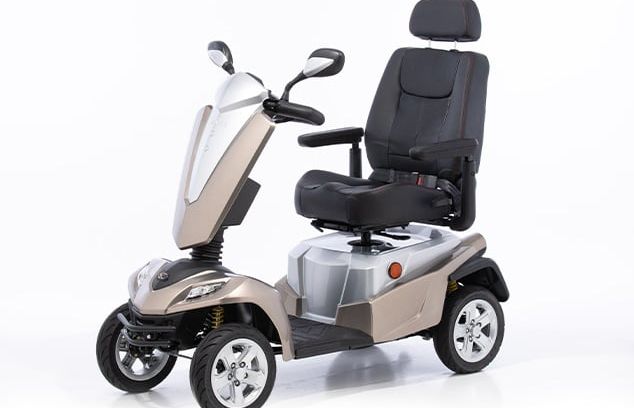
Kymco Healthcare
Maxer ER
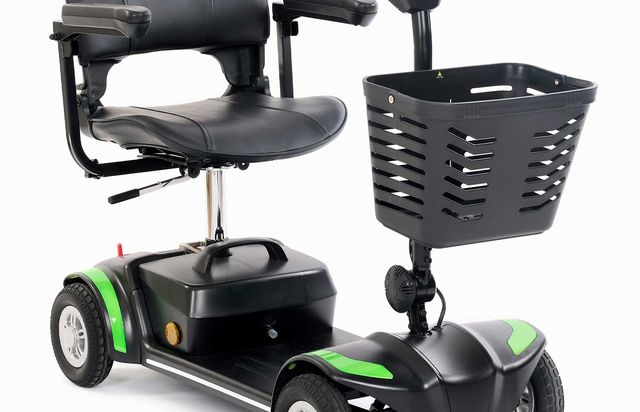
CareCo