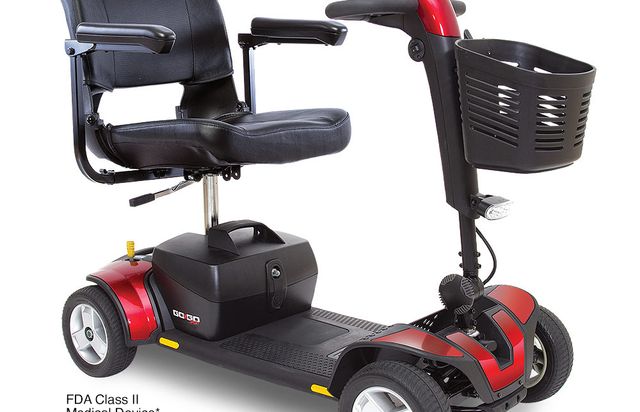
Drive Envoy 4 vs Envoy 8 (2026): Class 2 or Class 3?

Quick verdict. The Drive Envoy 4 and Envoy 8 are the same scooter built to two different legal classes. They share the frame, full all-round suspension, captain seat, pneumatic tyres and full road-legal lighting. The difference is the one that defines every scooter purchase: Class 2 or Class 3. The Envoy 4 is £1,285, capped at 4mph for pavement use, with a strong 25-mile range and no DVLA paperwork. The Envoy 8 is £1,804, is road-legal at 8mph, adds a bigger battery for 30 miles, a 500W motor and DVLA registration. Choose the Envoy 4 if you only ever ride on pavements and want to save around £519. Choose the Envoy 8 if you need to use the road, want the extra range and speed, and don't mind the free DVLA registration that comes with any Class 3 scooter.
At a glance: Envoy 4 vs Envoy 8
| Spec | Drive Envoy 4 | Drive Envoy 8 |
|---|---|---|
| Price (VAT exempt) | from £1,285 | from £1,804 |
| Class / top speed | Class 2 / 4mph | Class 3 / 8mph |
| Road-legal | No (pavement only) | Yes (road + limited pavement) |
| Range | 25 miles | 30 miles |
| Motor | standard | 500W |
| Weight capacity | 159 kg (25 st) | 160 kg (25 st) |
| Weight | 94 kg | 100 kg |
| Turning radius | 135 cm | not published (~150 cm) |
| Ground clearance | 6 cm | 6.5 cm |
| Length / width | 121 / 60 cm | 121 / 59.5 cm |
| Wheels / tyres | 4 / pneumatic | 4 / pneumatic |
| Suspension | full | full |
| Seat | captain | captain |
| Battery | 24V 34Ah sealed lead-acid | 24V 50Ah sealed lead-acid |
| Charging | off-board | off-board |
| Lights / indicators / mirrors / horn | yes | yes |
| DVLA registration | none required | required (free, nil-value) |
| Warranty | 2 years | 2 years |
| Best for | pavement-only riders on a budget | road use, longer range, more speed |
Unlike most comparisons, these two aren't rival designs from different brands. They are the same Drive Envoy chassis (also sold as the discontinued 6mph Envoy 6 and the larger Envoy 8+), so the ride, build quality and servicing are effectively identical. The only question that matters is which class you need, and that comes down to where you'll ride.
First, what these two scooters are
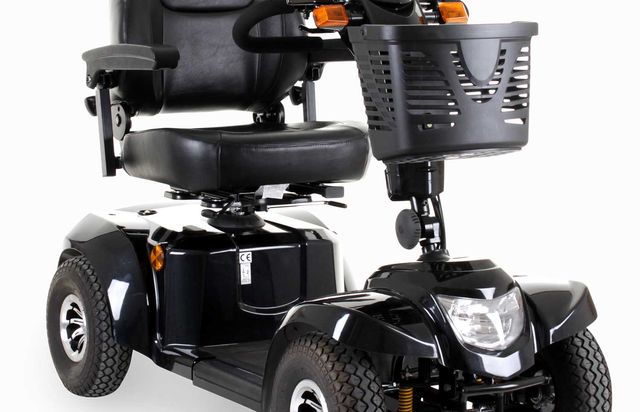
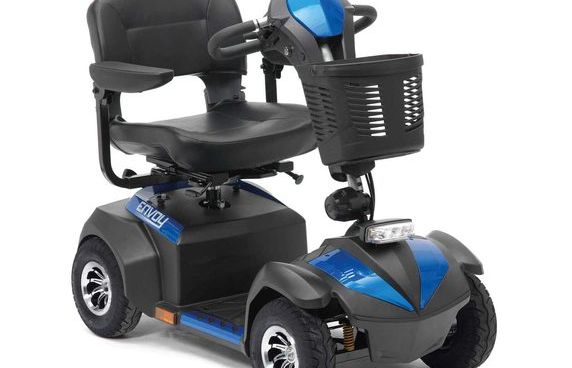
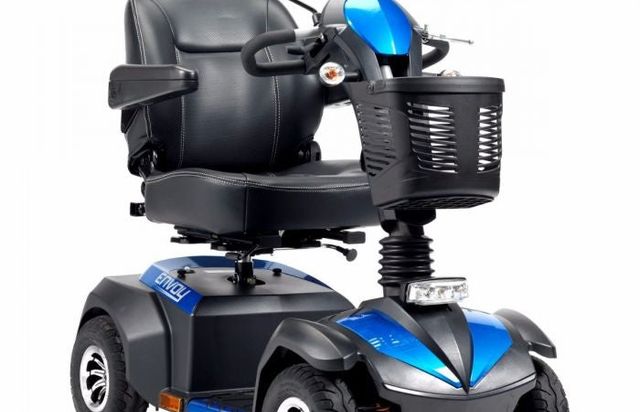
Both the Envoy 4 and Envoy 8 are mid-size, full-feature scooters, not lightweight travel models. They are 121cm long, weigh 94 to 100kg, run on pneumatic tyres with full all-round suspension, and neither dismantles or folds. This is a scooter that lives in a garage, shed or hallway and is driven out, rather than one you lift into a car boot. If boot transport is your priority, these aren't the right tools, and our best car boot mobility scooters guide is a better starting point.
What you get from that size and weight is a proper ride: suspension front and rear, a supportive captain seat, pneumatic tyres that soak up rough pavement, and a generous ~160kg weight capacity on both. These are everyday scooters built for comfort and range, and both carry full road-legal lighting, indicators, mirrors and a horn as standard, even the Class 2 Envoy 4.
The single decision that splits them is the class.
The Drive Envoy 4: Class 2, pavement, and the lower price
The Envoy 4 is the Class 2 version, capped at 4mph for pavement and pedestrian use. At £1,285 it is around £519 cheaper than the Envoy 8, and for anyone who never needs to use the road, it gives up very little.
What stands out:
- A 25-mile range that is genuinely impressive for a Class 2 scooter. The lower 4mph speed draws less power, so even on the smaller 34Ah battery it covers real distance
- No DVLA registration, no road tax, no paperwork of any kind, you buy it and ride it
- The same comfort platform as the Envoy 8: full suspension, captain seat, pneumatic tyres, adjustable tiller and armrests
- Delta (loop) handlebars as standard, easier to grip for arthritic or weaker hands, see our best mobility scooter for arthritis guide
- A slightly lighter 94kg and a tighter 135cm turning circle than the Envoy 8
The honest trade-off is speed and reach. 4mph is walking pace, fine for the shops and around town but slow if you have longer distances to cover on quieter roads, and the Envoy 4 cannot legally be used on the road at all, except to cross it. If your world is pavements, precincts and shops, that's no loss. If it isn't, the Envoy 8 exists for a reason.
The Drive Envoy 8: Class 3, road-legal, and more of everything
The Envoy 8 is the Class 3 version, road-legal at 8mph, and it is more scooter in almost every measurable way. At £1,804 it adds:
- A road-legal 8mph top speed, twice the Envoy 4's, for roads and dual carriageways (with the pavement mode limited to 4mph by law)
- A larger 50Ah battery giving a 30-mile range, five miles more than the Envoy 4
- A more powerful 500W motor, better for hills and for holding speed against a headwind
- The same full suspension, captain seat, pneumatic tyres and ~160kg capacity as the Envoy 4
What you take on is a little more of everything else too. It is heavier at 100kg, has a wider footprint to manoeuvre, and, being Class 3, must be registered with the DVLA. That registration is free (Class 3 scooters sit in a nil-value vehicle tax class) and needs no licence or test, but it is a step the Envoy 4 skips entirely. You also need to be at least 14 years old to use a Class 3 scooter on the road.
Crucially, the Envoy 8 is the more flexible of the two: because a Class 3 scooter can switch to a limited 4mph mode, it can legally do everything the Envoy 4 does, plus road use. The only reasons not to buy it are the higher price and the marginally bigger, heavier body.
The real decision: Class 2 vs Class 3
Because these two scooters are otherwise near-identical, the Envoy 4 vs Envoy 8 choice is the clearest Class 2 vs Class 3 decision on the market. Here is what each class means in UK law:
| Class 2 (Envoy 4) | Class 3 (Envoy 8) | |
|---|---|---|
| Top speed | 4mph | 8mph on road, 4mph on pavement |
| Where you can ride | pavements and pedestrian areas only | roads and pavements |
| DVLA registration | not required | required (free, nil-value tax class) |
| Minimum age | none set | 14 |
| Road tax | none | none |
| Driving licence | not required | not required |
| Required equipment | none mandated | lights, indicators, horn, mirror, 4mph limiter |
The practical takeaway: Class 2 is simpler, Class 3 is more capable. If you will only ever ride on pavements, in pedestrian areas, around the shops and indoors, the Class 2 Envoy 4 saves you money and paperwork with no downside. The moment you need to travel along a road rather than just cross it, whether that's a village without pavements, a longer route between towns, or simply keeping up with traffic on a quiet lane, you need the Class 3 Envoy 8.
For the full rules, see our guide to where you can legally drive a mobility scooter, and for other 8mph options our best Class 3 mobility scooters roundup.
Range, battery and running costs
The Envoy 8's 30-mile rated range edges the Envoy 4's 25 miles, driven by its larger 50Ah battery against the Envoy 4's 34Ah pack. Both figures are strong for their class and price, and both are best-case lab numbers, measured for a lighter rider on flat ground.
- Expect 20 to 30 percent less in the real world once you factor in hills, cold weather, a heavier rider and battery age
- Both use sealed lead-acid batteries, cheaper than lithium but heavier and shorter-lived, typically needing replacement every 18 months to 3 years with regular use
- Both charge from an off-board charger, so you can charge the battery pack away from the scooter
Even after real-world losses, both scooters comfortably cover a full day of local trips. Our battery guide explains what eats into range and how to make a battery last, and the running cost calculator estimates charging and replacement costs over time.
Comfort, ride and build
This is where the shared platform pays off: the two ride the same. Both have:
- Full front-and-rear suspension, unusual at this price and a genuine comfort advantage over the many budget scooters that have none
- Pneumatic tyres (28cm), which smooth out rough pavement and kerbs but, unlike solid tyres, can puncture and need occasional pressure checks
- A padded, adjustable captain seat with armrests, and an adjustable tiller
- A generous ~160kg weight capacity, suitable for larger riders, though for heavier users see our best mobility scooter for heavy users guide
Neither is a small scooter. At 121cm long with a turning circle around 135cm (Envoy 4) and a little more on the wider-bodied Envoy 8, both need space to manoeuvre indoors, so measure doorways and tight hallways before buying. The Envoy 4's tighter turning circle gives it a slight edge in cramped indoor spaces.
Transport and storage
Both are non-folding, non-dismantling scooters weighing 94 to 100kg, so neither is a realistic car-boot proposition. To transport either one you'll need:
- A vehicle with a ramp or a powered hoist, such as a WAV, a van, or a car boot hoist rated for the weight
- Or a tow-bar mounted scooter carrier rated to 100kg+
Both are listed as suitable for ferry travel, and the Envoy 4 additionally for taxi use. Neither is designed for flights or trains, so if you need portable transport, look instead at our best lightweight mobility scooters for travel. For storage, both need a garage, shed or wide hallway and access to a mains socket for charging. See taking your scooter on public transport for more on moving a full-size scooter around.
Which one should you buy?
Choose the Drive Envoy 4 if:
- You only ride on pavements, in pedestrian areas, around the shops and indoors
- You want to save around £519 and skip DVLA registration entirely
- 4mph is fast enough for your daily trips
- You value the slightly lighter weight and tighter turning circle for indoor use
Choose the Drive Envoy 8 if:
- You need to travel along the road, not just cross it
- You want the 8mph speed to cover distance and keep pace with traffic on quiet roads
- You'd use the longer 30-mile range and more powerful 500W motor for hills
- You're happy to complete the free DVLA registration that comes with any Class 3 scooter
For most buyers the deciding question is simply "will I ever need to use the road?" If the honest answer is no, the Envoy 4 is the smart buy: you get the same comfortable, well-suspended, road-lit scooter for £519 less and with no paperwork. If the answer is yes, or even "maybe, one day," the Envoy 8 is worth the premium, because it does everything the Envoy 4 does and adds road use, more speed and more range. Since a Class 3 scooter can be limited to 4mph for the pavement, the Envoy 8 is the safer choice if your needs might grow, while the Envoy 4 is the better value if they won't.
If neither quite fits, the Envoy 8+ (£2,199) is a larger, higher-capacity Class 3 step-up in the same family, worth a look if you want more scooter again.
Explore these and similar scooters
Browse full specs, or line any two up side by side with our comparison tool:
- Drive Envoy 4: the Class 2, 4mph, pavement version with a 25-mile range
- Drive Envoy 8: the Class 3, 8mph, road-legal version with 30 miles and a 500W motor
- Drive Envoy 8+: the larger, higher-spec Class 3 step-up in the same family
- CareCo Daytona XLR: a comparably priced Class 3 alternative with a 30-mile range
- Pride Go-Go Sport 4-Wheel: a lighter Class 2 option if boot transport matters more than range
For a wider shortlist, see our best Class 3 mobility scooters and longest range mobility scooters roundups, or compare any two scooters side by side.