
Pride Go-Go Elite vs CareCo Vive 4 (2026): Which Budget Travel Scooter?
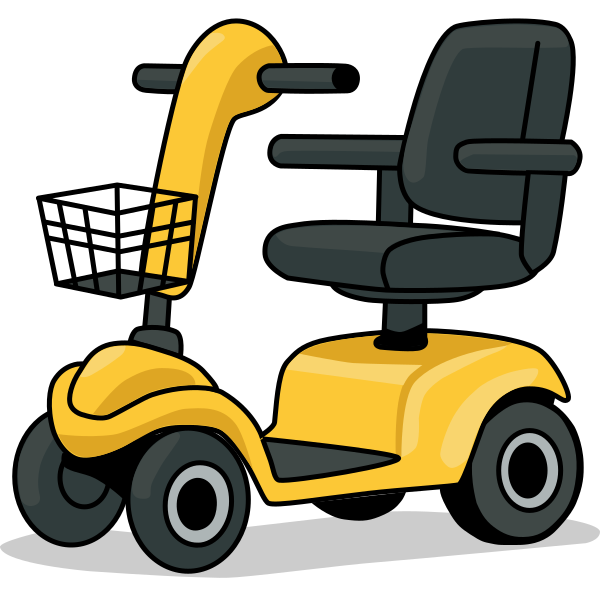

Quick verdict. The Pride Go-Go Elite Traveller and CareCo Vive 4 are two budget Class 2 travel scooters built for the same job: dismantle into the car boot, ride around the shops, pack away at home. They share a lot, including the same 136kg weight capacity, four wheels, solid tyres, lead-acid batteries and no suspension. The differences come down to a few practical things. The Go-Go Elite is £899, lifts apart into the lightest pieces (heaviest piece ~13kg), and comes with lights, a horn and a front basket as standard. The Vive 4 is £1,000 and spends that extra £100 on a tighter 115cm turning circle, a swivel seat and a higher seat height for taller users, but drops the lights and basket and sits very low to the ground. Choose the Go-Go Elite if you want the cheapest, lightest-to-lift option with the everyday extras included. Choose the Vive 4 if indoor manoeuvring and an easy-transfer swivel seat matter more than price.
At a glance: Go-Go Elite Traveller vs Vive 4
| Spec | Pride Go-Go Elite Traveller | CareCo Vive 4 |
|---|---|---|
| Price (VAT exempt) | from £899 | from £1,000 |
| Class / top speed | Class 2 / 4mph | Class 2 / 4mph |
| Range | up to 9 miles | up to 10 miles |
| Weight capacity | 136 kg (21.4 st) | 136 kg (21.4 st) |
| Weight (with batteries) | 39 kg | 43.8 kg |
| Heaviest piece | ~13 kg | dismantles into sections |
| Turning radius | 132 cm | 115 cm |
| Ground clearance | 4 cm | 3 cm |
| Seat | standard, 42–47 cm | swivel, 52–56 cm |
| Wheels / tyres | 4 / solid | 4 / solid |
| Suspension | none | none |
| Battery | 12V 12Ah sealed lead-acid | 24V 12Ah sealed lead-acid |
| Charging | off-board | off-board |
| Lights / horn / basket | yes / yes / yes | no / no / no |
| Warranty | 2 years | 2 years |
| Best for | cheapest, lightest lift, extras included | tight indoor turning, swivel seat, taller users |
Both are pull-apart travel scooters, not powered auto-folders. You separate the seat, battery pack and frame into pieces to load them, then reassemble at the other end. Neither needs a licence, tax or DVLA registration. The decision here is about the practical details of daily use, not headline features, because the two scooters are closely matched on the basics.
First, what kind of scooter these are
Both the Go-Go Elite Traveller and the Vive 4 are travel scooters: small, lightweight Class 2 machines designed to come apart so they fit in a car boot. This is a different category from the one-touch powered folding scooters like the Drive AutoFold, which fold themselves at the press of a button. Here you do the dismantling by hand, which is why these scooters are cheaper.
That makes them a good fit if you:
- Mainly need a scooter for shopping trips, appointments and days out
- Want to transport it in a normal car without a hoist
- Are happy to lift a few separate pieces rather than pay extra for powered folding
- Will use it on pavements, in shops and indoors, not on rough ground
If you need rugged terrain, longer range or road-legal 8mph speeds, neither of these is the right tool, and our best Class 3 mobility scooter guide is a better starting point.
The Pride Go-Go Elite Traveller: the cheapest, lightest lift
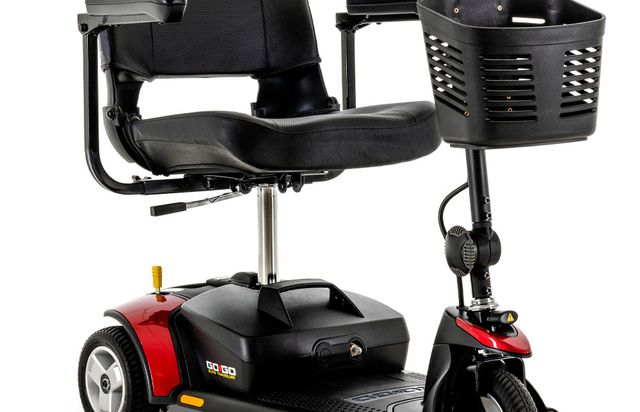
The Go-Go Elite Traveller (model SC40E) is Pride's long-running budget travel scooter, and at £899 it is the cheaper of the two. Its biggest strength is how it transports: it dismantles into separate pieces with a heaviest single piece of around 13kg, and weighs 39kg all in with the batteries fitted. For anyone loading a scooter solo, that lighter heaviest-piece figure is the number that actually matters at the kerbside.
What you get for the price:
- Lights and a horn built in, plus a front basket for shopping, none of which the Vive 4 includes
- A light, easy dismantle with a 13kg heaviest piece, the friendliest lift here
- Up to 9 miles of range, enough for shops, appointments and a day out
- The same 136kg weight capacity as the Vive 4
- A simple, proven and widely serviced platform, the Go-Go is one of the UK's most common travel scooters
The trade-offs are the honest budget ones. There is no suspension, the seat is a standard fixed seat at 42 to 47cm that does not swivel, and the turning circle is wider at 132cm, so it needs more room to come about indoors. Within those limits it is a lot of practical scooter, with the everyday extras, for the lowest price.
For where it sits among other affordable options, see our best mobility scooter under £1,000 roundup.
The CareCo Vive 4: tighter turning and a swivel seat
The Vive 4 is CareCo's budget travel scooter and at £1,000 it asks for about £100 more. It spends that money in two places you feel every day: manoeuvrability and the seat.
What the extra outlay buys:
- A tighter 115cm turning radius, noticeably better than the Go-Go's 132cm for getting around tight shop aisles and indoor corners
- A swivel seat that rotates so you can get on and off from the side, a real help for anyone who finds straight-on transfers awkward
- A higher, adjustable seat at 52 to 56cm, more comfortable for taller users than the Go-Go's 42 to 47cm
- A slightly longer 10-mile range and the ability to fold down to just 33cm high for storage
What you give up at this price is telling. The Vive 4 has no lights, no horn and no basket, so any of those become add-ons. It is also heavier overall at 43.8kg with batteries, and it sits very low at 3cm ground clearance, so it is strictly a smooth-surface scooter and will ground out on anything but flat pavement. Like the Go-Go, it has no suspension and runs solid tyres.
Range, speed and the law
Both are Class 2 mobility scooters. In the UK that means:
- A 4mph top speed, for pavement and indoor use (pedestrian areas, shops, around the home)
- No DVLA registration, no road tax, and no driving licence required
- Not designed for use along the road, except to cross it
The range figures are close: up to 9 miles for the Go-Go Elite and up to 10 miles for the Vive 4. Both numbers are best-case, measured for a lighter rider on flat ground, and both scooters use sealed lead-acid batteries, which are cheaper than lithium but heavier and shorter-lived. Expect less than the quoted range in the real world with hills, cold weather and a heavier load. Either way, these are sized for short, local trips, not all-day touring. Our battery guide explains what eats into range in practice.
For the full rundown of what Class 2 means and where you can ride, see do you need a licence for a mobility scooter.
Comfort, transfers and the seat
This is where the two scooters genuinely differ, and it is the most important section for many buyers.
- Swivel vs fixed: the Vive 4's seat rotates, so you can turn it towards you and slide on or off from the side. The Go-Go's standard seat does not swivel. If sideways transfers are easier for you, or you have a carer assisting, the Vive 4 has a real edge.
- Seat height: the Vive 4 sits higher (52 to 56cm) and the Go-Go lower (42 to 47cm). Taller users tend to be more comfortable on the Vive 4; shorter users may prefer the lower Go-Go, where feet reach the floor more easily.
- Ride: neither has suspension and both run solid puncture-proof tyres, so both transmit bumps and are happiest on smooth ground. The Vive 4's very low 3cm clearance makes it the more surface-sensitive of the two.
If a swivel seat and a higher seating position matter to you, the Vive 4 leads. If you are shorter and want feet flat on the floor, the Go-Go's lower seat may suit you better.
Transport, lifting and storage
Both come apart for the car, and both are realistic for a single person to load, but the Go-Go is the easier job:
- By car: the Go-Go dismantles into lighter pieces (heaviest ~13kg) and is lighter overall at 39kg with batteries. The Vive 4 is heavier at 43.8kg but also pulls apart and folds to just 33cm high, so it stows compactly once it is out of the boot.
- By public transport: both are listed as suitable for train, taxi and ferry. Neither is sold as an airline travel scooter, so if flying is your priority, look instead at our best lightweight mobility scooters for travel.
- Storage: both pack down small enough for a hallway or cupboard, and both use off-board chargers, so you can charge the battery away from the scooter.
For more on moving a scooter around, see taking your mobility scooter on public transport.
Which one should you buy?
Choose the Pride Go-Go Elite Traveller if:
- You want the lowest price (£899) and the easiest lift (13kg heaviest piece)
- You want lights, a horn and a basket included without paying extra
- You are shorter and prefer a lower seat with feet flat on the floor
- You value a widely serviced, proven platform that any mobility dealer knows
Choose the CareCo Vive 4 if:
- You need the tighter 115cm turning circle for tight indoor spaces
- You want a swivel seat for easier getting on and off
- You are taller and prefer the higher 52 to 56cm seat
- You can do without lights and a basket, and you only ride on smooth, flat ground
For most budget buyers the honest answer is that the Go-Go Elite Traveller does more for less: it is cheaper, lighter to load, and arrives with the everyday extras already fitted. The Vive 4 earns its £100 premium only if its swivel seat, higher seating position or tighter turning circle solve a problem the Go-Go does not, and they are exactly the kind of problems that make a daily scooter usable rather than just affordable. Both are dependable Class 2 travel scooters that will get you to the shops and back; the right one depends on whether you are optimising for price and easy lifting or for comfort and indoor manoeuvring.
Explore these and similar travel scooters
Browse full specs, or line any two up side by side with our comparison tool:
- Pride Go-Go Elite Traveller: the budget pull-apart travel scooter with extras included
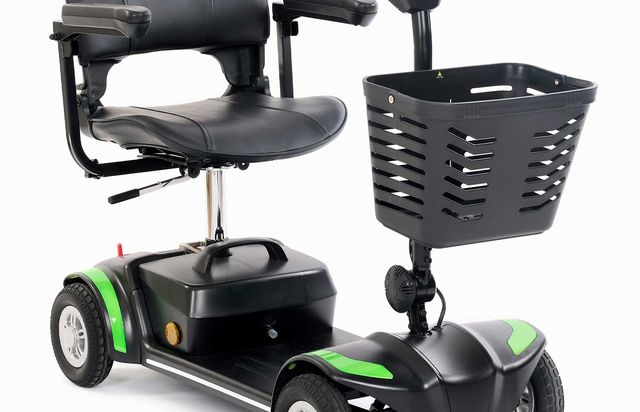
- CareCo Vive 4: the swivel-seat travel scooter with a tight turning circle
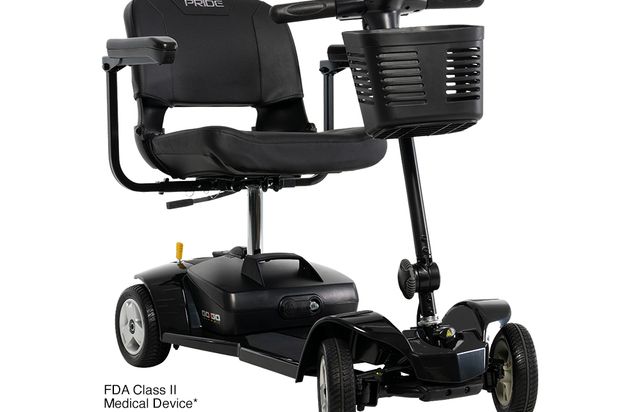
- Pride Go-Go Ultra X 4-Wheel: a similar Pride travel scooter to compare
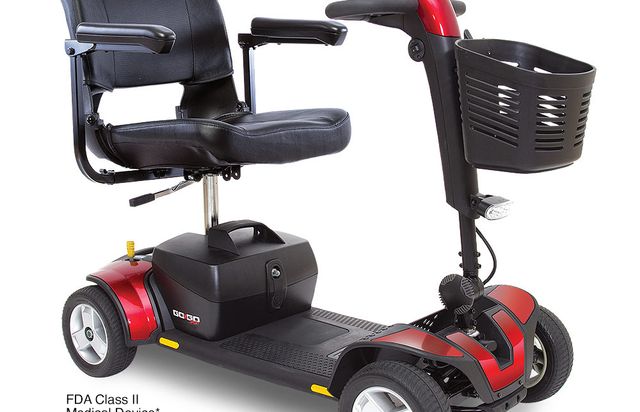
- Pride Go-Go Sport 4-Wheel: a roomier, longer-range step up
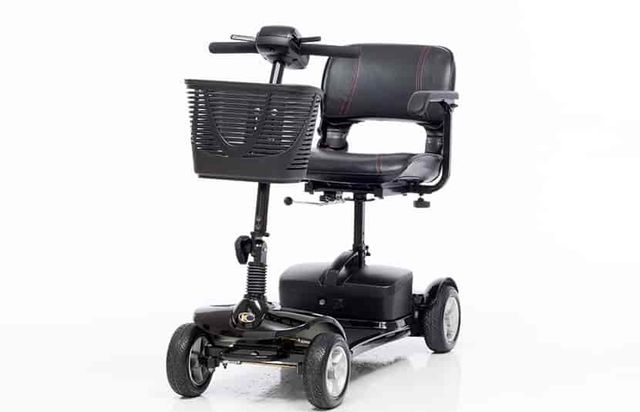
- Kymco K-Lite Comfort: a travel scooter with full suspension at a similar price
For a wider shortlist, see our best mobility scooter under £1,000 and best lightweight mobility scooters for travel, or compare any two scooters side by side.
Related Models
Pride Mobility
Go-Go Elite Traveller
Pride Mobility
Go-Go Sport 4-Wheel
Pride Mobility
Go-Go Ultra X 4-Wheel
Kymco Healthcare
K-Lite Comfort
CareCo