Understanding Quingo Mobility Scooters: The 5-Wheel Range Explained (2026)


Most mobility scooters come with three or four wheels. Quingo is the exception: every scooter in its range uses a patented five-wheel layout, and that single design choice shapes everything about how these scooters ride, who they suit, and why they cost what they do.
Quingo is a smaller, more specialist name than Pride or Kymco, and its scooters sit firmly at the premium end of the market. But for the right rider, the 5-wheel design solves problems that no conventional scooter can. This guide explains how it works, walks through the full range, and helps you decide whether a Quingo is worth the extra outlay.
The 5-Wheel Idea: What "Quintell" Actually Does
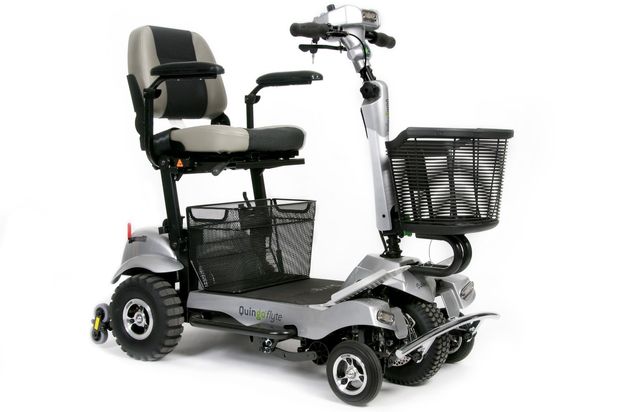
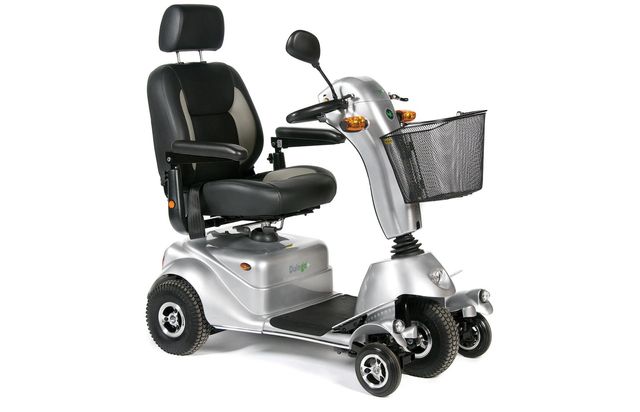
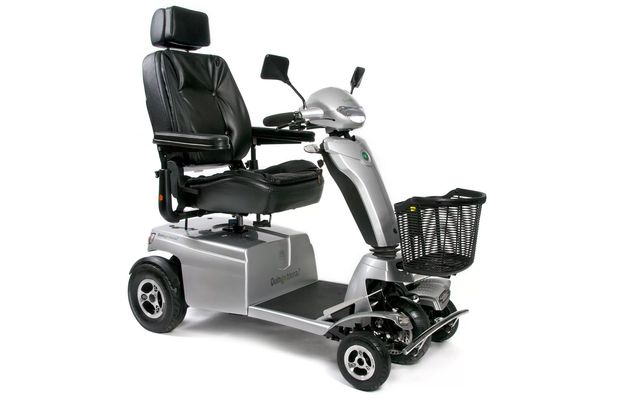
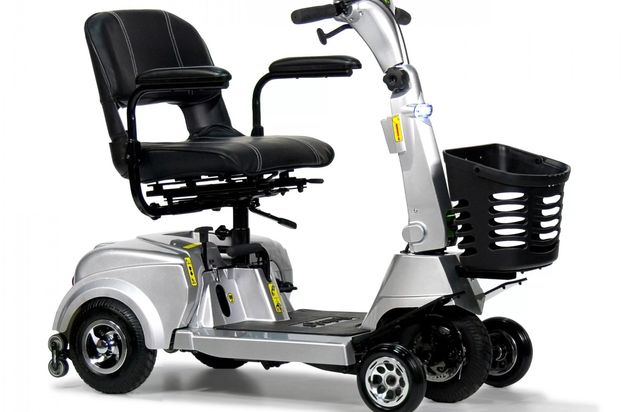
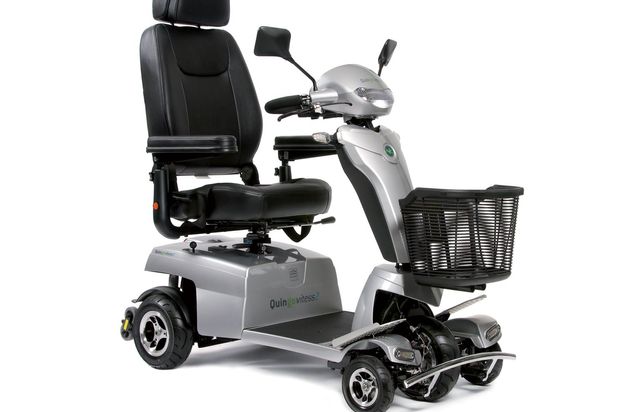
The heart of every Quingo is a system the company calls Quintell. Instead of one or two wheels at the front, a Quingo has two front wheels set close together that steer as a pair, plus a wide, stable rear axle. That gives you five wheels in total.
Why does that matter? It comes down to a trade-off that conventional scooters can't escape:
- 3-wheel scooters turn tightly and give lots of foot room, but they are the most prone to tipping on a camber or a tight corner.
- 4-wheel scooters are much more stable, but the front wheels eat into your foot space and widen the turning circle.
Quingo's 5-wheel layout is designed to give you both — a tight turning circle and strong anti-tip stability, with what Quingo claims is up to 80% more foot room than a comparable 4-wheel scooter. The two paired front wheels act like a single steering point for manoeuvrability, while the extra wheels spread the load and resist tipping.
Two other Quingo features are worth knowing:
- Kerbmaster — anti-beaching technology that helps the scooter climb kerbs and ramps without grounding out on its underside.
- Independent suspension on the higher models, tuned for the 5-wheel frame, for a smoother ride over rough pavements.
If you have ever felt nervous about a scooter leaning on a cambered pavement, or you have physically struggled to fit your feet onto a 4-wheel platform, this is the problem Quingo is built to solve. For more on the underlying trade-off, see our guide on 3-wheel vs 4-wheel mobility scooters.
Quingo's Range at a Glance
Quingo keeps its range deliberately small — six models, split between Class 2 (4 mph, pavement) and Class 3 (8 mph, road-legal).
| Model | Class | Top speed | Range | Max user weight | Price (inc. VAT) |
|---|---|---|---|---|---|
| Classic | 2 | 4 mph | 23 miles | 159 kg (25 st) | On request |
| Ultra 2 | 2 | 4 mph | 18 miles | 133 kg (21 st) | £2,995 |
| Plus | 3 | 8 mph | 30 miles | 159 kg (25 st) | £4,995 |
| Vitess 2 | 3 | 8 mph | 30 miles | 182 kg (29 st) | £5,695 |
| Flyte | 2 | 4 mph | 23 miles | 159 kg (25 st) | £5,995 |
| Toura 2 | 3 | 8 mph | 55 miles | 220 kg (35 st) | £7,695 |
Two things stand out. First, prices start at £2,995 and climb to £7,695 — well above the mainstream brands, which is the cost of the patented engineering. Second, the Class distinction matters: only the Plus, Vitess 2 and Toura 2 are road-legal at 8 mph. If you are unsure what that means for where you can ride, see where can you legally drive a mobility scooter and our Class 3 guide.
The Portable Quingos: Ultra 2 and Flyte
The biggest objection to a Quingo is size — the 5-wheel frame is bulky. Two models tackle transport head-on, in very different ways.
Ultra 2 — the take-apart traveller (£2,995)
The Ultra 2 is Quingo's answer to the travel scooter. It dismantles into pieces, and crucially the heaviest single component is just 17 kg — light enough for many people (or a companion) to lift into a car boot. You still get the 5-wheel Quintell stability, an 18-mile range, and anti-tip wheels, in a package that measures just 105 cm long.
The compromises are a lower 133 kg (21 stone) weight capacity, a smaller battery, and no mirrors or indicators. But as the most affordable Quingo and the only one that packs into an ordinary car without special equipment, it is the natural entry point to the brand.
Flyte — self-loading, no lifting at all (£5,995)
The Flyte takes a completely different approach and is arguably Quingo's cleverest product. Rather than being taken apart, it uses a MK2 docking station that loads and unloads the entire scooter from a compatible hatchback boot in under 60 seconds, by remote control — you never lift anything. The heaviest piece you might handle is a 8.9 kg ramp component.
It is a Class 2 scooter with a 23-mile range (extendable to 34 miles with a battery upgrade) and a 3-year frame warranty — the longest in the range. The catches are the near-£6,000 price and the need for a compatible hatchback for the docking station. But for someone who wants to travel independently and simply cannot lift a scooter, nothing else on the market works quite like it.
The Road-Legal Quingos: Plus, Vitess 2 and Toura 2
For 8 mph road use, Quingo offers three Class 3 models that climb steeply in capability and price.
Plus — the road-legal all-rounder (£4,995)
The Plus is the entry into Quingo's road-legal line. It pairs the 5-wheel frame with a 30-mile range from 50 Ah batteries, front and rear independent coil-spring suspension, and a tight 107 cm turning circle — remarkable for a road scooter. This is where Quingo's "80% more foot room" claim really pays off, giving a roomy, car-like driving position. It is semi take-apart, though the heaviest piece is a hefty 33.7 kg, so it is not a scooter you casually load into a boot.
Vitess 2 — technology and comfort (£5,695)
The Vitess 2 adds genuine luxury features you rarely see on a mobility scooter: a rear-view camera, heated tiller grips, and adjustable suspension. It folds flat for transport (though at around 116 kg it needs a hoist), carries up to 182 kg (29 stone), and keeps the 30-mile range. Think of it as the Plus with a comfort and technology upgrade for riders who spend serious time on their scooter.
Toura 2 — the flagship (£7,695)
The Toura 2 is Quingo's flagship and one of the most capable mobility scooters sold in the UK. Its headline figure is a 55-mile range from 100 Ah batteries — the longest range of any scooter we track — backed by a 220 kg (35 stone) weight capacity, adjustable full suspension, a digital dashboard, and an optional all-weather canopy. That capacity also puts it among the best heavy-duty options for larger riders who want a 5-wheel frame.
It folds flat for transport, but there is no getting around the fact that it is a large, heavy, near-£7,700 machine with a 132 cm turning circle. This is a scooter for someone who wants to cover long distances in comfort and treats the scooter as their primary means of getting around, not an occasional runabout.
Quingo vs Pride vs Kymco: How It Compares
Quingo does not really compete on price — it competes on the 5-wheel design. Here is how it lines up against the two mainstream brands:
| Quingo | Pride | Kymco | |
|---|---|---|---|
| Wheels | 5 (Quintell) | 3 or 4 | 3 or 4 |
| Range | £2,995–£7,695 | £849–£4,999 | £1,607–£4,029 |
| Standout feature | Anti-tip stability, foot room | Broadest UK lineup | Motability leader, long battery life |
| Best for | Stability-conscious riders | Choice and value | Motability and dealer support |
The honest summary: if your main concern is cost, or you simply want a reliable way to reach the shops, Pride or Kymco will serve you well for a fraction of the price. Quingo earns its premium only if the 5-wheel stability genuinely matters to you — because you've struggled with tipping, need extra foot room, or want the reassurance of the anti-tip design. That is a real need for some riders, and Quingo is the only brand that meets it.
VAT Relief and Funding
If you have a long-term illness or disability, you can buy a Quingo scooter free of VAT under UK law — a 20% saving. On the Toura 2 that is over £1,280. Qualifying conditions include arthritis, MS, heart disease, COPD and many others; being elderly alone does not qualify. Quingo applies the exemption at checkout once you confirm eligibility.
Given the high prices, funding is worth investigating. Quingo offers finance directly, and some buyers use grants or charitable funding. For the full picture, see our guide on funding for mobility scooters. Note that Quingo's premium models are less commonly available through the Motability Scheme than mainstream brands — check current availability with a Quingo advisor.
Running Costs and Insurance
The bigger the scooter, the bigger the batteries — and the Quingo range runs from 15 Ah on the Ultra 2 up to 100 Ah on the Toura 2. Larger battery packs cost more to replace (budget accordingly at the premium end), so charge after every use, never let the batteries run flat, and top up monthly during periods of non-use. An annual service of £50–£100 covers brakes, tyres, battery health and the steering. See our maintenance checklist for the full routine.
Insurance is strongly recommended for any scooter and effectively essential for the three road-legal Class 3 models — if your scooter injures someone or damages property on the road, you are personally liable without cover. Given Quingo's high resale values, make sure your policy reflects the full replacement cost. Our insurance guide explains what to look for.
Which Quingo Is Right for You?
| Your need | Recommended model | Why |
|---|---|---|
| Most affordable way into the range | Ultra 2 | £2,995, take-apart, 17 kg heaviest piece |
| Travel with no lifting at all | Flyte | Self-loads into a hatchback in under 60 seconds |
| Road-legal on the tightest budget | Plus | 8 mph, 30 miles, 107 cm turning circle |
| Comfort and technology | Vitess 2 | Rear camera, heated grips, 182 kg capacity |
| Maximum range and capacity | Toura 2 | 55-mile range, 220 kg, full suspension |
Before you commit to any Quingo, ask yourself the key question: do you actually need the 5-wheel design? If you have never felt unstable on a conventional scooter, the premium may be hard to justify. If stability, foot room, or the fear of tipping have held you back, Quingo offers something genuinely different.
Whatever you decide, arrange a home demonstration. A Quingo advisor will bring the scooter to you so you can try the 5-wheel ride on your own pavements — the only real way to tell whether it feels right. You can find models and book a demo through the Quingo UK website or browse the full Quingo range on our site.