
Mobility Scooter Types Explained: How to Compare and Choose (2026)

Search "mobility scooter" and you'll find hundreds of models that look broadly similar: a seat, a tiller, four wheels or three, a basket. The differences that actually matter to you are hidden a layer down, and they don't sit on one scale from "basic" to "premium" — they're four separate decisions that combine independently.
This guide walks through each of those four decisions, tells you which side of each one you're likely on, and links to a detailed roundup once you know which type you need. It won't rank individual scooters — our comparison tool and the guides linked throughout do that. It's here to answer a different question: which of those guides should you actually be reading?
The Four Decisions Behind Every Scooter
| Decision | The two (or three) options | What it depends on |
|---|---|---|
| Legal class | Class 2 (pavement, 4 mph) or Class 3 (road, 8 mph) | Where you plan to ride |
| Wheels | 3, 4, or 5 | Manoeuvrability vs. stability |
| Portability | Folding, dismantling, or full-size/fixed | How and how often you transport it |
| Capacity | Everyday, heavy-duty, or off-road | Your weight and the terrain you cover |
A scooter is one answer to each row — a Class 2, 4-wheel, folding, everyday scooter is a completely different machine from a Class 3, 3-wheel, full-size, off-road one, even though both are "just" mobility scooters. Work through the rows in order; each one narrows the field for the next.
1. Pavement or Road: Class 2 vs Class 3
This is the decision that matters most, because it's a legal restriction, not a preference. Every mobility scooter sold in the UK is one of two classes:
- Class 2 scooters top out at 4 mph and are restricted to pavements, footpaths and pedestrian areas. You can cross a road, but not travel along one except where there's genuinely no pavement. No DVLA registration is required.
- Class 3 scooters can travel at up to 8 mph, are permitted on the road as well as the pavement (dropping to 4 mph on pavements), and must be registered with the DVLA before use. They're built larger and heavier to meet the road-legal requirements — lights, indicators, a horn.
Neither class needs a driving licence, road tax or MOT — see do you need a licence for a mobility scooter for the full legal picture, and where can you legally drive a mobility scooter for exactly which roads, lanes and crossings are and aren't allowed for each class.
If you mostly run local errands — shops, the GP, visiting nearby — Class 2 is almost always the right answer, and it's the cheaper, lighter, more portable option besides. If you need to cover distances that involve roads without pavements, or you want the extra range and speed for longer trips, look at Class 3.
Once you know your class, the roundups do the rest: Best Class 2 mobility scooters covers pavement-legal models from £900 to £2,995, and Best Class 3 mobility scooters covers road-legal models from £1,299 upward. For the cleanest illustration of what the class decision actually buys you, our Drive Envoy 4 vs Envoy 8 comparison puts the same chassis in both classes side by side.
2. 3, 4, or 5 Wheels: Manoeuvrability vs. Stability
Once you know your class, the next fork is how many wheels sit under you — and it's a genuine trade-off, not a spec to maximise.
- 3-wheel scooters turn more tightly (useful in shops, lifts and narrow hallways) and give you more legroom, but feel less planted on cambers, kerbs and uneven ground.
- 4-wheel scooters are more stable outdoors and typically support higher weight capacities, at the cost of a wider turning circle and less foot space. Some modern 4-wheel models use tight-turning technology to close the gap with 3-wheelers.
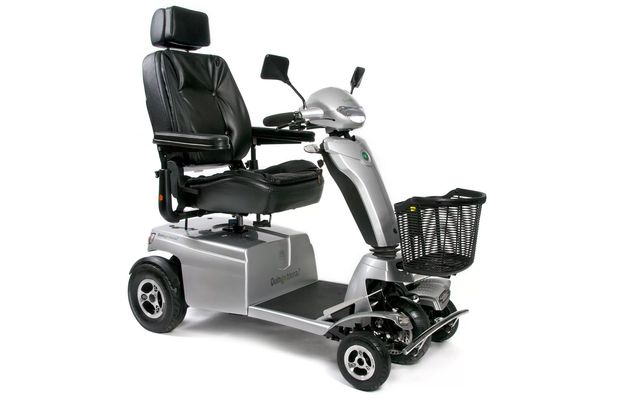
- 5-wheel scooters are a UK niche built by Quingo, using two paired front wheels that steer together to aim for a 3-wheeler's turning circle with a 4-wheeler's stability. The trade-off is bulk and price — Quingo models sit two to three times above a mainstream equivalent.
Our full 3-wheel vs 4-wheel guide goes through this decision in detail, including real turning-circle figures and which user profiles suit each layout. If the 5-wheel format itself is what interests you, the Quingo mobility scooters guide covers the full range and is honest about when the premium is and isn't worth paying.
3. Folding, Dismantling, or Full-Size: How Portable Do You Need It?
This decision is really about your car boot and your back, not the scooter itself.
- Folding scooters collapse as a single unit, often at the press of a button, in seconds. The trade-off is that the folded scooter is one bulkier lift — typically 20 to 25 kg for the whole unit minus battery.
- Dismantling scooters separate into several smaller pieces (seat, battery, chassis), each lighter to lift individually, usually 11 to 16 kg for the heaviest single part. Reassembly takes longer than unfolding, but no single lift is as heavy.
- Full-size / fixed-base scooters don't break down at all. They're built for stability, range and comfort rather than transport, and are generally the choice once portability stops being a requirement — kept at home, or moved by vehicle hoist or ramp rather than lifted.
The number to compare models on isn't total weight, it's the heaviest single piece you or a carer has to lift — our foldable mobility scooter buyer's guide explains why that figure (sometimes called HAP, "heaviest assembled/attached part") matters more than the headline weight, and walks through both mechanisms in detail.
From there:
- Best car boot mobility scooters ranks purely on heaviest-piece weight and folded size, across both folding and dismantling designs.
- Best lightweight mobility scooters for travel is the pick for flights, cruises and trains specifically, where every kilogram and every airline battery rule matters.
- Best mobility scooters with suspension is worth a look if you've assumed portable means a harsh ride — most folding scooters skip suspension to save weight, but a handful don't.
4. Everyday, Heavy-Duty, or Off-Road: Matching Capacity to Terrain
The last axis is about you and where you actually ride, not a "better" tier of scooter.
- Everyday scooters cover the majority of buyers: standard seat width, weight capacities up to roughly 150–160 kg, and a chassis built for pavements and reasonably smooth ground.
- Heavy-duty scooters are built for larger riders, with reinforced frames, wider seats and weight capacities from 200 kg up to 227 kg on the highest-capacity models sold in the UK.
- Off-road / all-terrain scooters prioritise ground clearance, tyre tread and suspension travel for parks, coastal paths and uneven countryside rather than pavements.
If you're not sure which bracket you fall into, check the published weight capacity against your own weight with a comfortable margin rather than cutting it close — our best heavy-duty mobility scooters roundup covers the 200–227 kg capacity range in detail. For rough or unpaved ground specifically, see what defines an off-road mobility scooter, including how to try a tramper before you buy. If range rather than raw capacity is your priority, our longest range mobility scooters roundup ranks models by real-world miles per charge, several of which are also heavy-duty capable. Comfort on longer rides also matters if you have joint pain — see best mobility scooters for arthritis for models chosen on that basis specifically.
Budget and Ongoing Costs
Price tracks the four decisions above more than it tracks brand: a Class 2, 3-wheel, dismantling, everyday scooter can be had from around £530, while a Class 3, 4-wheel, full-size, heavy-duty scooter can run past £5,000. If budget is your primary constraint, start with best mobility scooters under £1,000 rather than working through the four decisions in order — it will steer you toward Class 2, lighter and more compact models by necessity.
The sticker price is also only part of the cost. Our running cost calculator estimates charging, servicing and battery replacement, and financial support for mobility equipment covers the grants and schemes that can reduce the upfront cost. If you're open to buying second-hand to stretch your budget further within a higher category, see buying a used mobility scooter for what to check before you do.
Quick Reference: Which Type Fits Your Situation?
| Your situation | Likely class | Likely wheels | Likely portability | Start here |
|---|---|---|---|---|
| Local errands, shops, pavements only | Class 2 | 3 or 4 | Folding or dismantling | Best Class 2 |
| Need to travel on roads without pavements | Class 3 | 4 | Full-size | Best Class 3 |
| Flights, trains, cruises | Class 2 | 3 | Ultra-light folding | Best for travel |
| Fits in a small car boot | Class 2 | 3 or 4 | Folding or dismantling | Best car boot |
| Larger rider, need higher capacity | Class 2 or 3 | 4 | Full-size | Best heavy-duty |
| Rough paths, parks, coastal walks | Class 3 | 4 | Full-size | Off-road features |
| Want maximum stability, budget flexible | Class 2 or 3 | 5 | Full-size or folding | Quingo guide |
| Tightest possible budget | Class 2 | 3 | Folding or dismantling | Under £1,000 |
Frequently Asked Questions
What types of mobility scooters are there?
Mobility scooters vary along four mostly independent axes: legal class (Class 2, pavement-only at 4 mph, or Class 3, road-legal at 8 mph), wheel layout (3, 4 or 5 wheels), portability (folding, dismantling or full-size and fixed), and capacity (everyday, heavy-duty or off-road/all-terrain). A given model is a combination of all four, not a single category.
What is the difference between a Class 2 and Class 3 mobility scooter?
Class 2 scooters are limited to 4 mph and legally restricted to pavements and pedestrian areas. Class 3 scooters can travel at up to 8 mph, are permitted on the road as well as the pavement (at 4 mph on pavements), and must be registered with the DVLA. Class 3 models are also larger, heavier and typically more expensive.
Is a 3-wheel or 4-wheel mobility scooter better?
Neither is better outright. 3-wheel scooters have a tighter turning circle and more legroom, which suits indoor use and narrow spaces. 4-wheel scooters are more stable on kerbs, slopes and uneven pavements, which suits regular outdoor use. Some 4-wheel models close the gap with tight-turning technology, and Quingo's 5-wheel design aims to combine both advantages.
What is the difference between a folding and a dismantling mobility scooter?
A folding scooter collapses as a single unit, usually in seconds, but the folded scooter is one bulkier lift, often 20 to 25 kg. A dismantling scooter separates into several smaller pieces — seat, battery, chassis — each lighter to lift individually, but reassembly takes longer. Folding suits quick transitions like flights or trains; dismantling suits users who can manage several light lifts but not one heavy one.
How do I compare mobility scooters before buying?
Start with where you'll use it (pavement only, or road too — this fixes the class), then how you'll transport it (car boot, so folding or dismantling matters, or fixed-base for home use), then who's riding it (weight capacity and seat width), and finally budget. Narrowing on those four questions first turns a market of hundreds of models into a shortlist of a handful worth test-riding.
Which mobility scooter type is easiest to transport in a car?
Folding and dismantling "boot scooters" are built for this. The number that matters is the heaviest single piece you or a caregiver must lift, not the total weight — dismantling models typically have a lower heaviest-piece weight than folding ones, even when the folding model is lighter overall.
Do I need to try a scooter before buying?
Yes, wherever possible. The categories above narrow the field, but turning circle, seat comfort and how a lift actually feels are hard to judge from a spec sheet. Most dealers offer in-showroom trials or home demonstrations — worth using once you've settled on a type from this guide.
Related Models
TGA Mobility
Breeze S3
eFOLDi
Compass
Drive DeVilbiss
Envoy 4
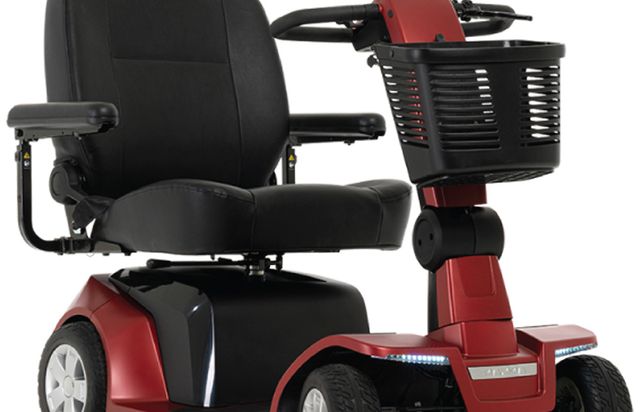
Pride Mobility
Maxima 4-Wheel
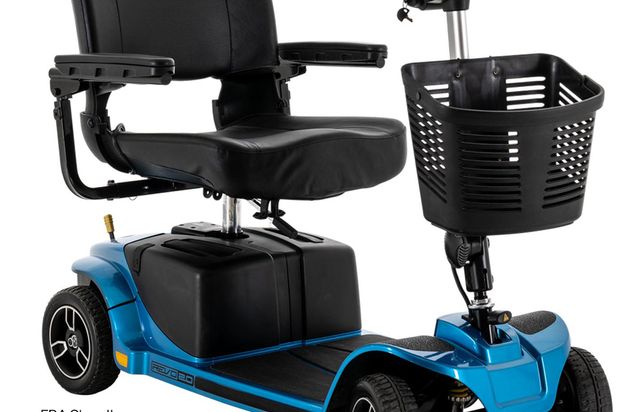
Pride Mobility
Revo 2.0 4-Wheel
Quingo